
Review the actual duties and qualification documents for this sector.

Sector-specific risks
Exposed utilities, instruments, sampling, dust and external heat.
Buying committee
Engineering defines conditions; integration checks interfaces; procurement checks scope; quality checks documents; installers and maintenance check execution and access.
Technical submittal
Use equipment/application lists, thermal/electrical inputs, layout/BOM, controls, model documents, inspection scope and responsibility matrix.
Evidence boundary
These are application-review routes, not claims of completed projects or sector-wide certification.
Relevant product families
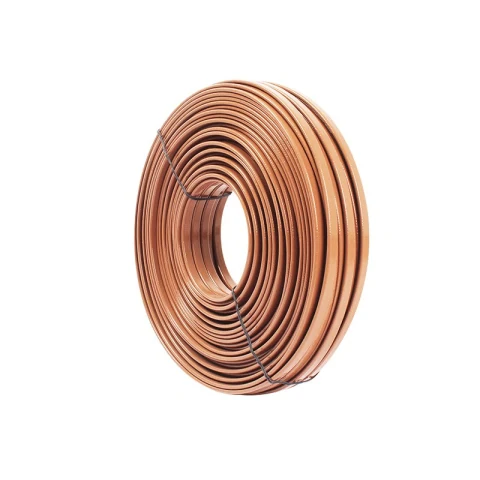 LONRIHEAT Medium-temperature self-regulating heating cable
Related answers, products & documents
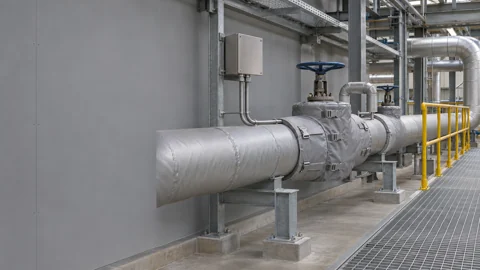 Industrial Heat Tracing & Process Heating
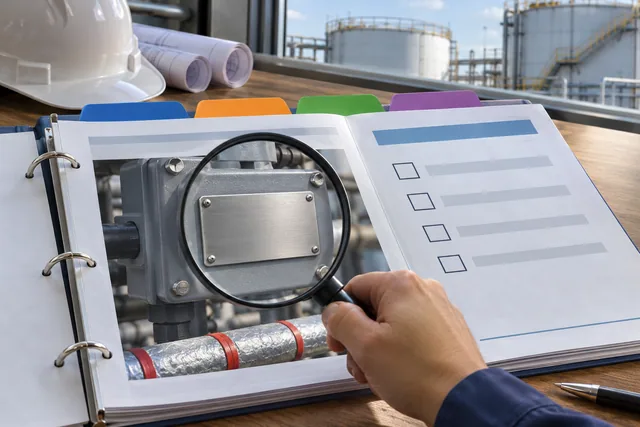 Model compliance and market documents
 Engineering review
Explore this industry by application
Choose the actual duty, then open the application page for design inputs, limitations and selection questions. These shared technical pages are not completed-project claims.
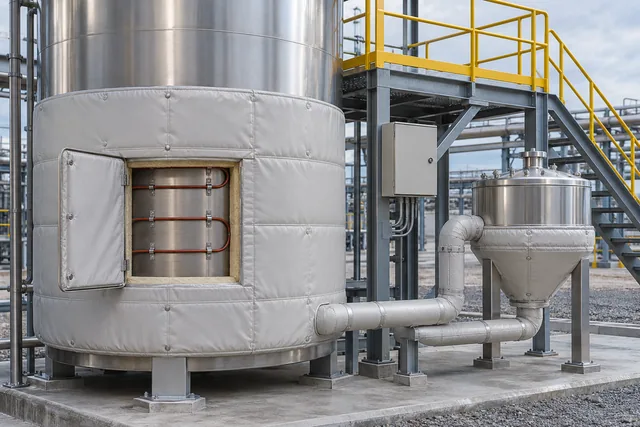 Process Temperature MaintenanceMaintain the required process temperature across pipes and fittings where cooling can affect flow or product consistency.
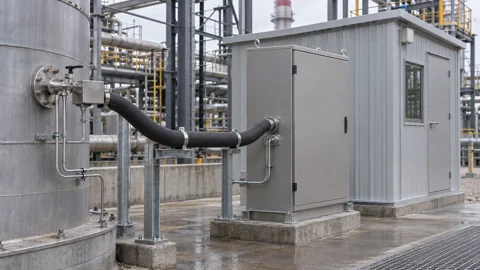 CEMS Heated Sample LinesConfigure heated sample lines with PTFE, FEP, PFA, stainless steel or copper tubing, and constant-wattage or self-regulating heating options.
Process Temperature Maintenance
Maintain the required process temperature across pipes and fittings where cooling can affect flow or product consistency.
Application and low-temperature risk
Process fluid may cool below its required transport or holding condition during operation, standby or restart.
Equipment or areas to review
Maintain/startup temperatures, flow and duty cycle, maximum exposure/cleaning conditions, equipment geometry, insulation, supply and circuit schedule. Identify each heated zone and the unheated interfaces.
Define the design objective
Distinguish freeze protection, temperature maintenance, heat-up and anti-condensation. State the required condition and operating schedule; each duty needs its own heat balance and acceptance basis.
CEMS Heated Sample Lines
Configure heated sample lines with PTFE, FEP, PFA, stainless steel or copper tubing, and constant-wattage or self-regulating heating options.
Application and low-temperature risk
Sample transport must be reviewed for condensation, material compatibility and the conditions at the analyser interface.
Equipment or areas to review
Gas composition, dew point, target sample conditions, tube count/material/bore, route length, pressure/flow, purge/calibration lines, power and end fittings. Identify each heated zone and the unheated interfaces.
Define the design objective
Distinguish freeze protection, temperature maintenance, heat-up and anti-condensation. State the required condition and operating schedule; each duty needs its own heat balance and acceptance basis.
Product types to review for this industry
These are review candidates. Suitability depends on the actual duty, location classification and model-level documents.
Move from duty definition to procurement
- List each pipe, tank, hose or equipment item and its operating and shutdown conditions.
- Record minimum ambient, maintain and exposure temperatures, dimensions, insulation and supply voltage; mark unknown inputs.
- Review circuit design, controls, installation access and the responsibility for each system interface.
- Request the matching drawing, specification revision, testing scope and any required market-specific compliance evidence.
- Submit quantities, destination and project requirements for technical review before confirming the quotation.
Engineering review topics · Review compliance scope · Submit your project conditions